


















Stone Dials & The Art of Natural Materials
NO TWO ALIKE
STONE DIALS &
NATURAL MATERIALS
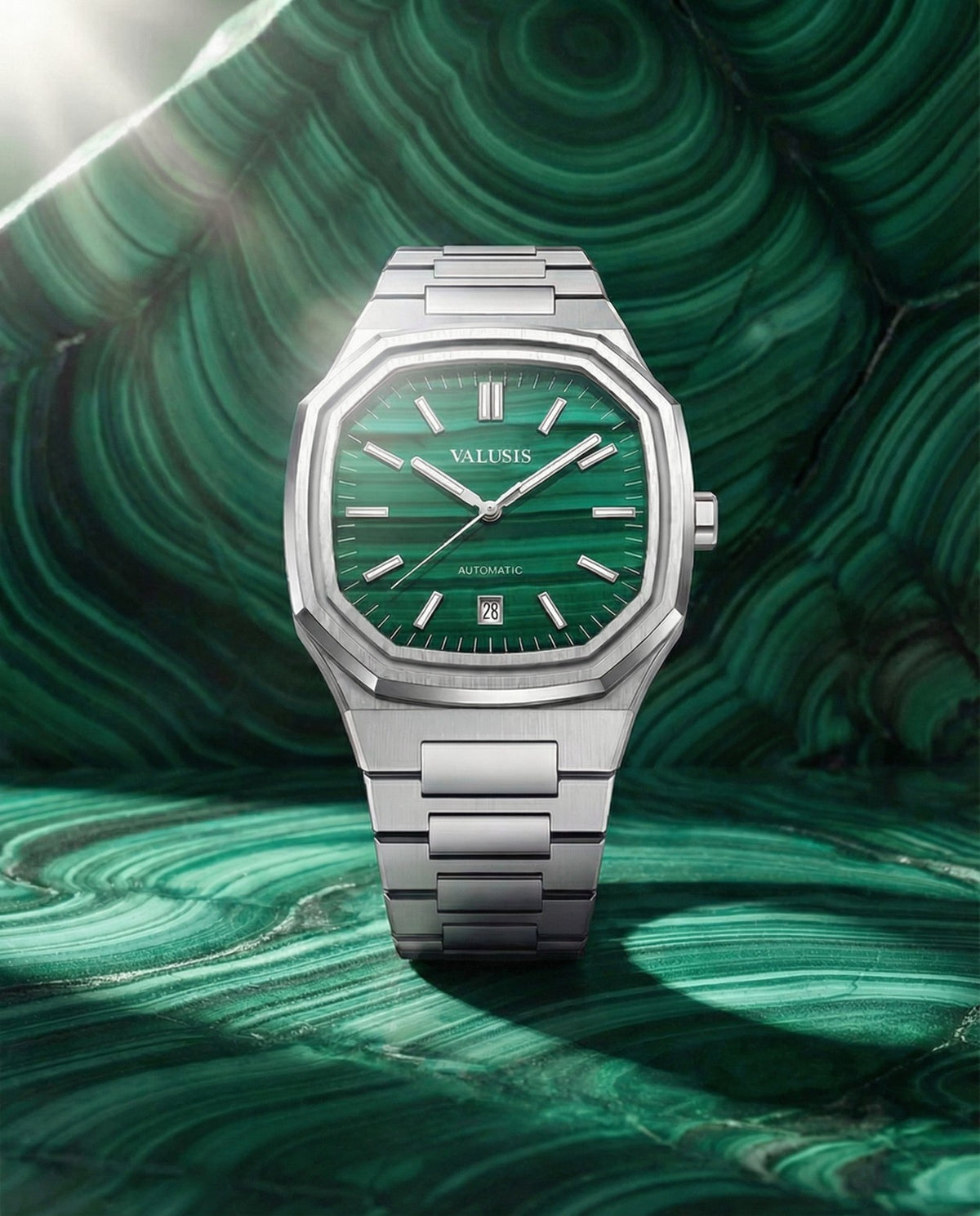
Malachite. Tiger Eye. Natural stone cut thin enough to sit in a watch case. Every dial is unique.
 EXPLORE STONE DIALS
THE CRAFT OF CUTTING STONE
To become a watch dial, natural stone must be sliced to under 0.5mm thickness. Most stones fracture at that thinness. Malachite and tiger eye are among the few that survive the cut.

Each slice reveals a unique cross-section — concentric malachite rings, chatoyant tiger eye bands. No two dials are identical. Every Valusis stone watch is a one-of-a-kind object.
MALACHITE
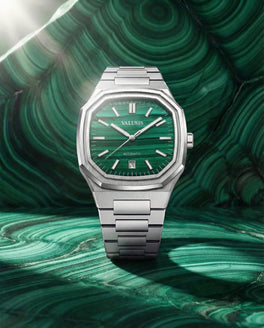
A copper carbonate mineral from the Congo and Zambia. The signature green swirls are concentric growth rings formed underground over thousands of years.

Behind sapphire crystal in a clean silver case, the malachite shifts and changes with every angle. The watch looks different in morning light versus evening.

TIGER EYE
A silicified mineral with a fibrous structure that produces chatoyancy — a band of reflected light that moves across the surface like a cat's eye.

Stone dial watches from luxury houses start at $5,000. The material cost is real. Valusis sources the same quality stone and delivers the same result — no name markup.
